Real Estate Drone Video in Canada: 2026 Guide
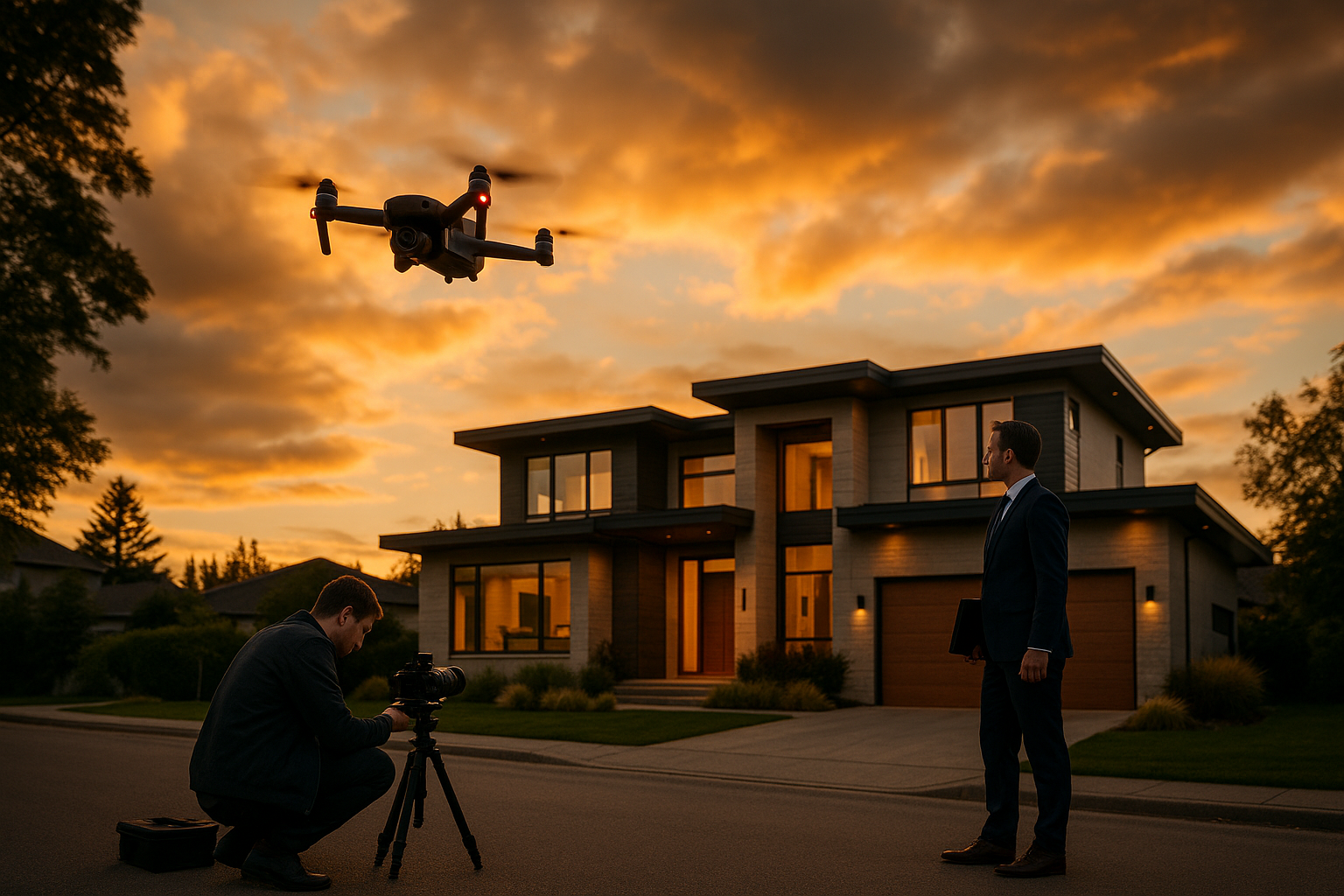
- Real Estate Drone Video Canada Rules in 2026
- How Much Does Real Estate Drone Video Cost in Canada in 2026?
- What Affects Drone Video Pricing?
- Best Uses for Drone Video in Canadian Real Estate
- Drone Video ROI for Realtors
- Recommended Drone Video Packages for 2026
- How to Choose a Drone Video Provider in Canada
Drone video has moved from a luxury add-on to a practical listing tool for Canadian real estate marketing. In 2026, buyers expect more context before booking a showing: lot size, neighbourhood setting, proximity to water, skyline views, privacy, access, and outdoor lifestyle. For agents, brokerages, developers, and property sellers, understanding real estate drone video Canada rules is just as important as understanding pricing and ROI.
The right aerial footage can help a listing feel larger, more premium, and easier to understand. The wrong approach can create compliance issues, delays, or unusable footage. This guide explains the key rules, 2026 cost ranges, package options, and best uses for drone video in Canadian real estate markets.
Real Estate Drone Video Canada Rules in 2026
Drone operations in Canada are regulated by Transport Canada under the Remotely Piloted Aircraft Systems framework. For real estate, the rules depend on the drone weight, location, airspace, distance from people, and whether the flight is considered basic or advanced. Most professional real estate drone video should be handled by a qualified operator who understands these categories and plans flights safely.
Key compliance points for real estate shoots
- Drone registration: Most drones weighing 250 grams or more must be registered with Transport Canada.
- Pilot certification: Pilots generally need a Basic or Advanced Pilot Certificate depending on where and how they fly.
- Controlled airspace: Properties near airports, heliports, seaplane bases, or dense urban zones may require additional authorization.
- Distance from people: Flights close to bystanders, roads, sidewalks, schools, parks, or neighbouring homes may trigger stricter requirements.
- Privacy: Operators should avoid intrusive filming of neighbours, private yards, windows, and identifiable people without consent.
- Local restrictions: Parks, conservation areas, municipalities, condo boards, and private communities may have extra rules or permission requirements.
- Insurance: Professional real estate drone providers should carry appropriate commercial liability coverage.
For agents, the practical takeaway is simple: do not book based on price alone. A compliant drone video provider should ask about the address, airspace, property type, timing, and nearby hazards before confirming the shoot.
How Much Does Real Estate Drone Video Cost in Canada in 2026?
Drone video pricing in Canada varies by city, operator experience, deliverables, editing complexity, travel, and regulatory requirements. A rural acreage outside Calgary is priced differently than a luxury waterfront listing in West Vancouver or a downtown infill property near controlled airspace in Toronto.
Typical 2026 drone video pricing ranges
- Drone photo add-on: $150 to $350 when added to a standard photo shoot.
- Drone video add-on: $250 to $600 when added to a listing video package.
- Standalone drone video: $500 to $1,200 for aerial-only footage and edited clips.
- Full listing video with drone: $900 to $2,500 for interior, exterior, aerials, music, editing, and branded/unbranded versions.
- Luxury or acreage cinematic package: $1,500 to $3,500+ depending on scope, twilight timing, multiple visits, talent, lifestyle scenes, and advanced editing.
Markets like Toronto, Vancouver, Montreal, Ottawa, Calgary, Edmonton, Kelowna, Victoria, Halifax, and Winnipeg often have higher pricing for premium providers because of travel time, traffic, airspace planning, and demand. Smaller Canadian markets may be less expensive, but operators with certification, insurance, and strong editing still command professional rates.
What Affects Drone Video Pricing?
Drone video cost is not just about sending a pilot into the air for ten minutes. The final price usually reflects preparation, safety planning, capture time, editing, colour correction, licensing, exports, and revisions. In 2026, the biggest pricing factors include location, airspace, lot size, season, turnaround time, and whether the drone video is part of a larger real estate media package.
Common pricing variables
- Airspace complexity: Controlled airspace or proximity to airports can require extra planning.
- Property size: Large acreages, farms, resorts, and development sites need more flight time.
- Weather windows: Wind, rain, snow, and low cloud can delay or complicate aerial work.
- Editing style: Simple flyovers cost less than cinematic storytelling with music, transitions, speed ramping, and captions.
- Delivery needs: MLS-compliant video, vertical reels, YouTube cuts, paid ad versions, and agent branding add value and time.
- Travel: Rural, cottage, mountain, and waterfront properties often include mileage or travel fees.
Best Uses for Drone Video in Canadian Real Estate
Drone video is most valuable when it reveals information that ground-level media cannot. For some listings, aerial footage is a major selling point. For others, a short aerial sequence is enough to establish context and polish the presentation.
Acreage, farms, and rural estates
Drone video is ideal for properties where land is the product. It can show boundaries, tree lines, outbuildings, driveways, paddocks, workshops, trails, and surrounding privacy. This is especially useful in Alberta, Saskatchewan, Manitoba, rural Ontario, and Atlantic Canada.
Waterfront and recreational properties
For lakefront, oceanfront, and cottage listings, aerial video can show shoreline, dock placement, beach access, orientation, privacy, and distance to neighbouring properties. In markets such as Muskoka, Kelowna, Vancouver Island, the Sunshine Coast, Prince Edward County, and Nova Scotia, this can significantly improve buyer understanding.
Luxury real estate
Luxury listings benefit from cinematic drone movement that communicates scale, prestige, architecture, landscaping, and setting. Aerial video is especially effective when combined with twilight footage, interior walkthroughs, agent-led narration, and lifestyle scenes.
Urban infill and neighbourhood context
In cities like Toronto, Vancouver, Montreal, Ottawa, and Calgary, drone footage can help show walkability, skyline proximity, parks, transit, ravines, schools, and nearby commercial corridors. However, urban drone shoots also require more careful rule compliance.
New developments and commercial real estate
Developers and commercial brokers use drone video to communicate site scale, access routes, surrounding amenities, construction progress, and future potential. Drone footage can support listing pages, investor presentations, social ads, and pre-sale campaigns.
Drone Video ROI for Realtors
The ROI of drone video is not only measured by whether one listing sells faster. For realtors, strong aerial content can also help win future listings, justify commission, improve seller confidence, and generate social media engagement. A polished listing package signals that the agent invests in premium marketing.
Drone video is especially ROI-positive when it highlights a feature that changes perceived value: a ravine lot, mountain view, lake access, large parcel, estate driveway, landscaped backyard, rooftop terrace, or proximity to major amenities. If the aerial perspective answers buyer questions before the showing, it can attract better-qualified leads.
Recommended Drone Video Packages for 2026
For most Canadian real estate teams, drone services work best as part of tiered packages. A starter package may include drone photos and a short exterior aerial clip. A standard package may include a full listing video with interior, exterior, and aerial footage. A premium package may include twilight, vertical reels, neighbourhood footage, agent intro, and paid ad cutdowns.
- Essential package: MLS photos, basic drone photos, and a few aerial clips.
- Listing video package: Interior walkthrough, exterior video, drone sequences, branded and unbranded edits.
- Luxury package: Cinematic video, drone, twilight, lifestyle details, vertical social edits, and premium colour grading.
- Developer package: Drone progress video, site overview, neighbourhood context, and multiple campaign-ready edits.
How to Choose a Drone Video Provider in Canada
Before hiring, ask whether the provider is certified, insured, experienced with real estate, and familiar with Transport Canada requirements. Review samples from similar property types, not just highlight reels. A strong provider should know how to make a home look marketable while also respecting safety, privacy, and local rules.
The best real estate drone video in Canada combines compliance, creative direction, and sales strategy. It should not feel like random aerial footage. It should help buyers understand the property, remember the listing, and take the next step.
Planning a 2026 listing and want drone video that is cinematic, compliant, and built for ROI? Book your real estate media package today and get aerial content designed to help your property stand out in the Canadian market.
Further reading
Ready to tell your story on camera?
Cinematic video production with 48–72h delivery, across Canada.