Niagara-on-the-Lake Estate Video: Production Planning Guide
- Define the purpose of the estate video
- Define the Niagara-on-the-Lake production quote
- Build a story around the property
- Plan drone footage legally and strategically
- Prepare the estate for filming
- Choose the right deliverables
- Agree on a realistic production schedule
- Frequently asked questions
- Confirm travel and production availability
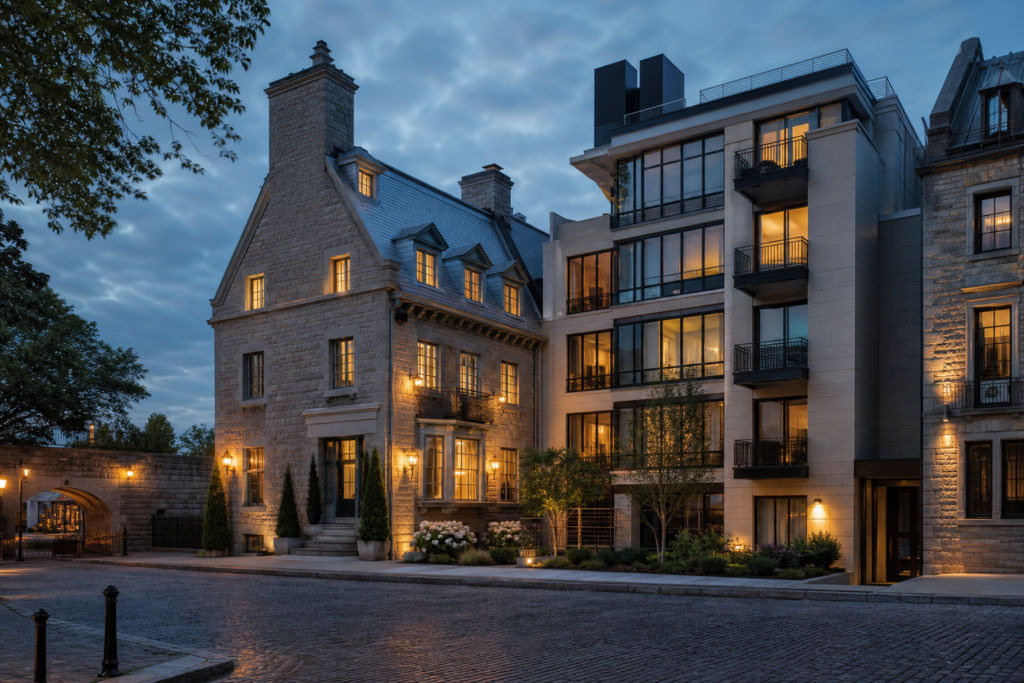
Niagara-on-the-Lake luxury real estate video production requires more than a standard room-by-room walkthrough. Estate listings often combine architecturally significant homes, landscaped grounds, vineyards, pools, guest houses and lifestyle features that cannot be communicated through photography alone. The video must help qualified buyers understand the property while presenting the experience of living in one of Ontario’s most distinctive luxury markets.
This practical guide explains how agents and sellers can plan an effective production, compare package costs and prepare an estate for filming in 2026.
Define the purpose of the estate video
Start by deciding where the video will appear and what action it should generate. A cinematic property film can introduce the listing on MLS-linked pages, luxury brokerage websites, YouTube and private buyer presentations. Short edits can support Instagram Reels, TikTok, YouTube Shorts and paid campaigns.
For most Niagara-on-the-Lake estates, the primary video should establish the property’s location, scale and character. Supporting vertical videos can highlight individual selling points such as a wine cellar, chef’s kitchen, resort-style garden or private vineyard.
Choose the primary audience
Clarify whether the campaign is aimed at local move-up buyers, Toronto and GTA purchasers, international clients, investors or buyers seeking a seasonal residence. This decision affects the pacing, narration and features shown. A Toronto buyer may need more context about the community, while a local buyer may be more interested in craftsmanship, lot size and privacy.
Define the Niagara-on-the-Lake production quote
Price the actual property and requested work. Identify interior and exterior coverage, access, separate locations, agent audio, finished formats and any additional lighting visit. Ask for editing, revisions, licensing, applicable taxes and travel to be itemised.
Confirm aerial feasibility, weather alternatives and a delivery date before booking. This article does not establish a verified local market average. Use the Canadian video quote checklist to compare scope and production methods.
Build a story around the property
A successful estate film should have a clear progression rather than a random collection of attractive shots. Begin with the property’s strongest visual hook, then establish the setting, introduce the architecture, move through the main living spaces and finish with a memorable lifestyle moment.
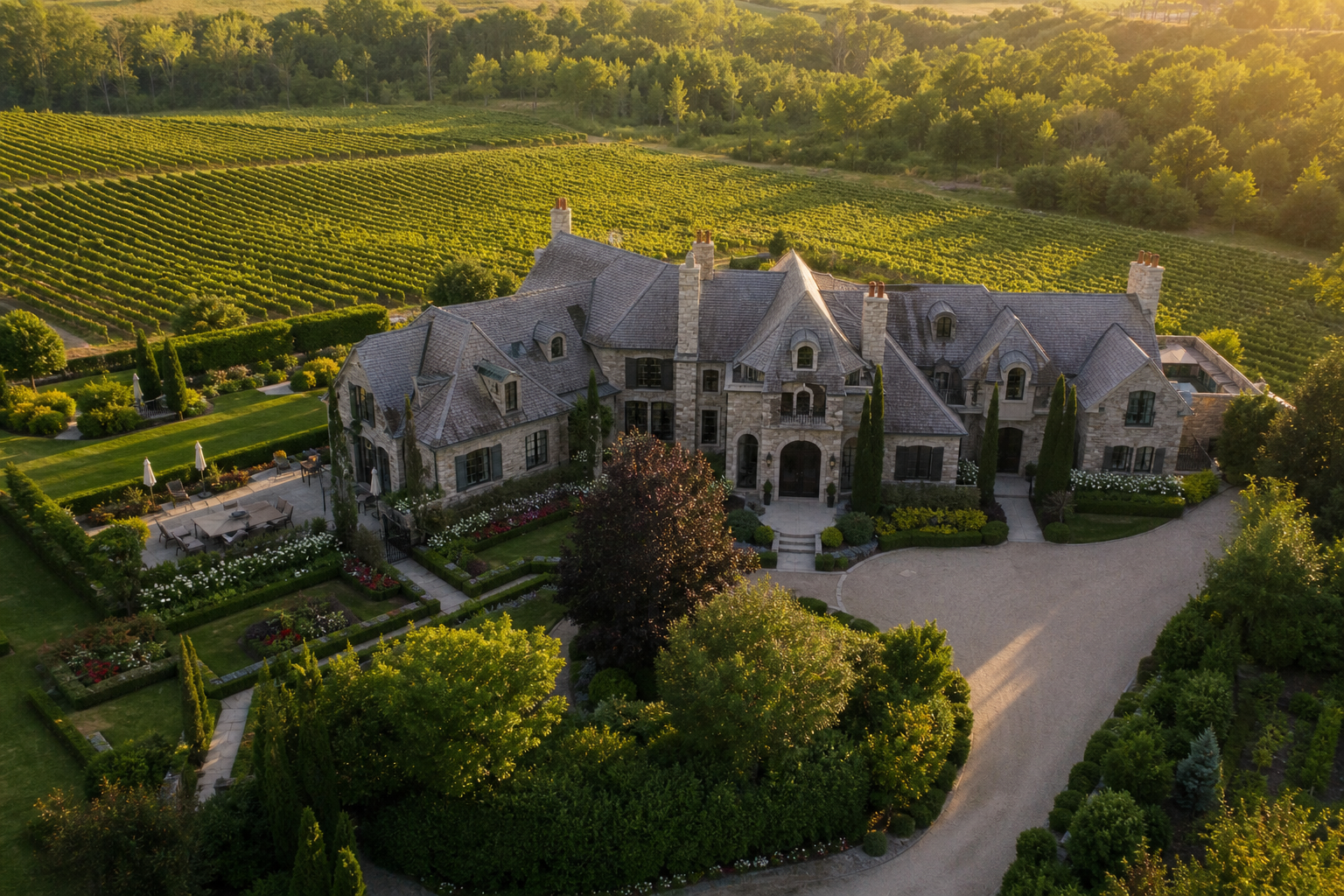
For example, a video might open above vineyard rows at sunrise, transition to the estate entrance, reveal the main residence and then move into entertaining spaces. The final sequence could feature the terrace, pool or gardens during golden hour. This structure gives viewers a sense of arrival and connects individual features into one experience.
Prioritize distinctive details
Create a shot list that identifies what cannot be found in a typical listing. Relevant details may include original millwork, imported stone, custom wine storage, heritage elements, mature landscaping, equestrian facilities, orchards or a detached guest suite. Capture wide shots for orientation and close details for emotion and craftsmanship.
Plan drone footage legally and strategically
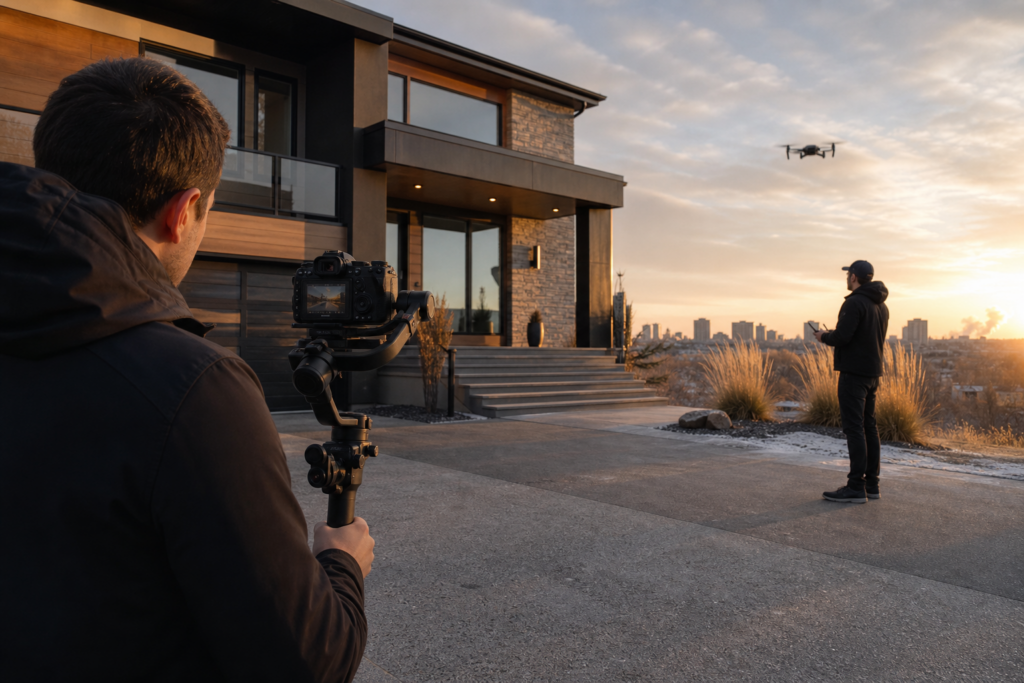
Aerial footage can be especially valuable for Niagara-on-the-Lake estates because it shows the relationship between grounds, landscaping, vineyard context and the relationship between multiple structures. However, drone operations must comply with Transport Canada requirements, airspace restrictions, weather conditions and privacy considerations.
Confirm that the operator holds the certification required for the proposed flight and carries appropriate insurance. Flights near controlled airspace or sensitive locations may require advance authorization. A professional operator should assess the site before promising specific aerial shots.
Drone footage should answer a buyer’s questions, not simply add spectacle. Use it to demonstrate acreage, privacy, access, natural surroundings and proximity to recognizable amenities.
Prepare the estate for filming
Video reveals movement through a property, so preparation must extend beyond the individual angles used for photography. Complete the following steps before the crew arrives:
- Remove vehicles, garden equipment, waste bins and temporary signage from key exterior views.
- Clean windows, reflective surfaces, pool areas and prominent architectural finishes.
- Turn on working interior lights and replace mismatched or burnt-out bulbs.
- Open curtains consistently and hide visible cords, remotes and personal items.
- Schedule landscaping, pool cleaning and seasonal maintenance before production day.
- Confirm access to gates, guest buildings, cellars, garages and mechanical amenities.
- Pause contractors, deliveries and loud maintenance during filming.
Provide the production team with a feature sheet and note any rooms or objects that must remain private. If the home has staff, tenants or neighbouring properties nearby, communicate the filming schedule in advance.
Choose the right deliverables
A complete campaign should adapt the same production investment to several platforms. Request a horizontal master film for websites and YouTube, plus vertical versions designed around mobile-safe framing. Captions are valuable because many viewers initially watch social content without sound.
A practical deliverable set may include one two-to-four-minute cinematic film, one 30-to-60-second vertical reel, one 15-second teaser and several clean clips for future posts. Agents appearing on camera should record both horizontal and vertical introductions when possible.
Agree on a realistic production schedule
Provide the desired launch date, readiness date, access arrangements and priority exterior conditions. Ask the producer to confirm capture, review and delivery milestones for the actual scope. Additional locations, weather changes or return visits need explicit arrangements.
Frequently asked questions
How long should a luxury listing video be?
Most primary films work well at two to four minutes. The correct length depends on the estate’s complexity and the strength of its story. Social versions should generally be shorter and open with an immediate visual hook.
Should the listing agent appear in the video?
An agent introduction can build trust and explain unusual features, but it should remain concise. A combination of brief on-camera segments and cinematic property footage usually feels more polished than a continuous guided tour.
Is seasonal filming important in Niagara-on-the-Lake?
Yes. Vineyards, gardens, pools and mature grounds can change dramatically throughout the year. When timing permits, select a date that supports the property’s strongest exterior features and keep a weather alternative available.
Confirm travel and production availability
This Niagara-on-the-Lake article is a planning resource. Confirm local provider availability, travel and permissions before booking; it does not establish a local Melon Media crew. For the current Toronto and GTA offering, see real estate video services.
Ready to tell your story on camera?
Photography and video for Toronto and the GTA. Review the service scope and delivery timing before booking.