How Much Does a Real Estate Videographer Cost in Canada?
- What is the average real estate videographer cost in Canada?
- What do you usually get with a standard real estate video package?
- Why do some real estate videographers charge $400 while others charge $2,000?
- Does property size affect video pricing?
- How much does drone video add to the cost?
- Are vertical videos included in real estate videographer pricing?
- How much should agents budget for video plus photography?
- Do real estate videographers charge travel fees?
- Is real estate video worth the cost?
- What questions should you ask before hiring a real estate videographer?
- What is a realistic 2026 budget for real estate video in Canada?
If you are comparing marketing options for a listing, one of the first questions is simple: how much does a real estate videographer cost in Canada? The short answer is that most professional real estate video projects in Canada range from about $400 to $1,500 for a standard residential listing, with luxury, drone-heavy, or agent-led cinematic productions often reaching $2,000 to $4,000 or more.
The better answer is that pricing depends on what kind of video you need, how large the property is, how polished the edit should be, and whether the project includes drone footage, vertical social clips, voiceover, agent on-camera segments, or fast delivery. This FAQ-style guide breaks down the real costs so agents, brokers, builders, and property marketers can plan smarter.
What is the average real estate videographer cost in Canada?
For a typical Canadian residential listing, real estate videography usually falls into these ranges:
- Basic walkthrough video: $300 to $700
- Professional cinematic listing video: $700 to $1,500
- Luxury property film: $1,500 to $4,000+
- Drone video add-on: $150 to $500
- Vertical social media reel add-on: $150 to $500
- Full photo, video, drone package: $800 to $2,500+
In smaller markets, pricing may sit toward the lower end. In major metro areas such as Toronto, Vancouver, Calgary, Montreal, Ottawa, and Halifax, rates are often higher because of travel time, competition, parking, equipment costs, licensing, and the level of production expected by agents and sellers.
What do you usually get with a standard real estate video package?
A standard real estate video package usually includes a 60 to 120 second edited video designed to show the flow, finishes, and lifestyle of the property. Most professional packages include interior footage, exterior footage, licensed music, basic colour correction, simple branding, and delivery in a web-ready format.
Some videographers include minor revisions, while others charge after the first edit. It is important to ask whether the package includes vertical versions for Instagram Reels, TikTok, YouTube Shorts, and Facebook, because those formats often require separate editing rather than a simple crop.
Why do some real estate videographers charge $400 while others charge $2,000?
The difference usually comes down to production value. A $400 video may be a quick walkthrough with limited editing, no drone, no scripted story, and minimal lighting. That can still be useful for smaller listings or rentals where the goal is simply to give buyers more context than photos alone.
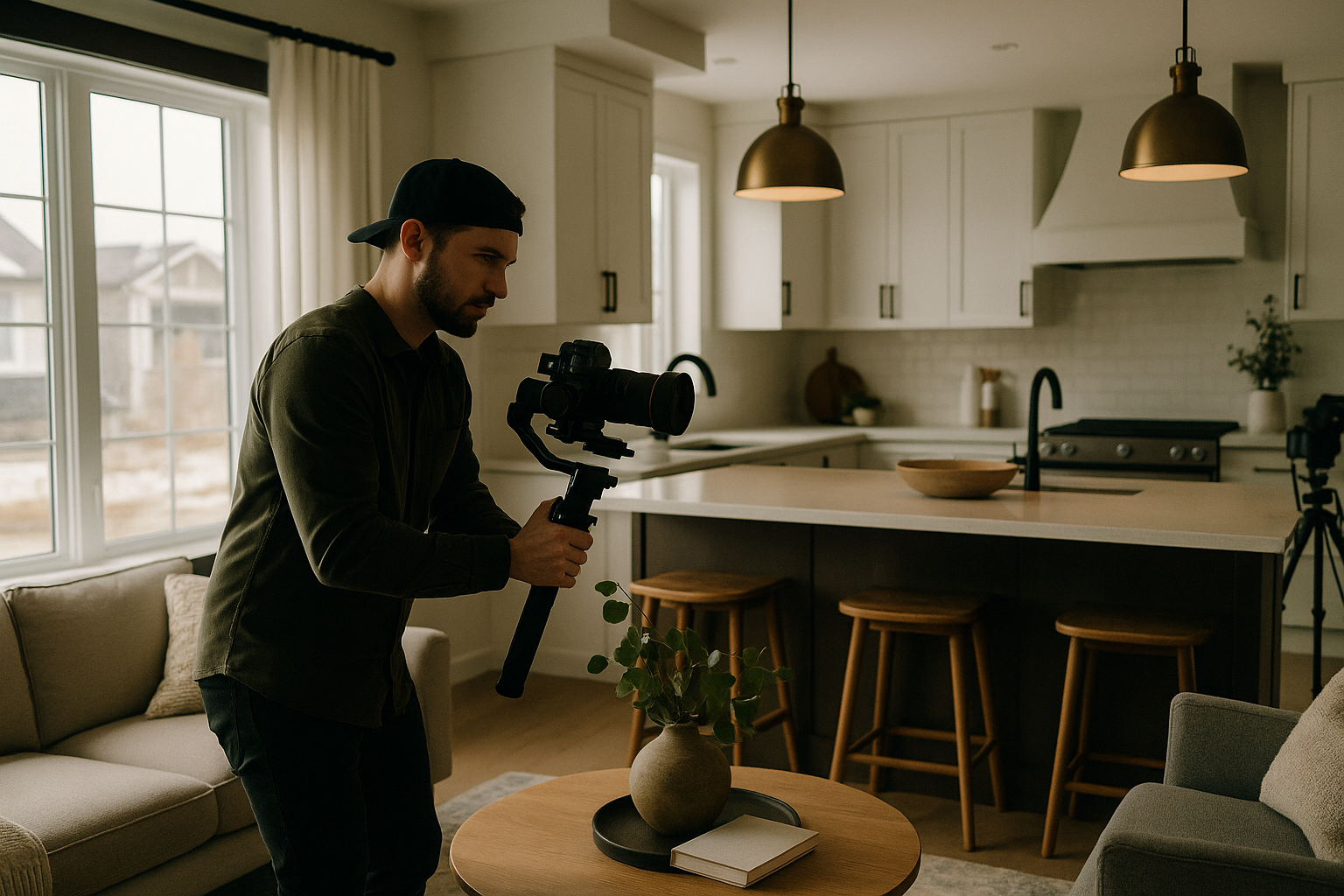
A $2,000 video may include a pre-shoot plan, cinematic camera movement, drone footage, gimbal work, detail shots, twilight timing, agent introduction, custom editing, motion graphics, multiple aspect ratios, and faster turnaround. For higher-value listings, new developments, or personal brand campaigns, the extra production can help the property feel more premium and help the agent stand out.
Does property size affect video pricing?
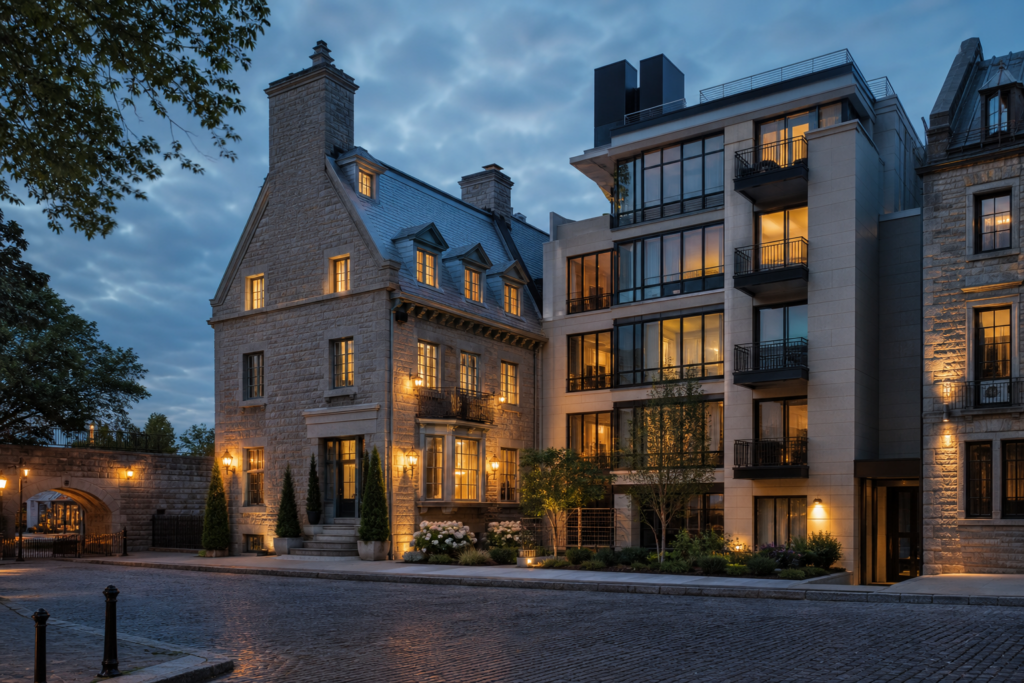
Yes. Property size is one of the biggest pricing factors. A 700 square foot condo may take far less time to shoot and edit than a 5,000 square foot estate with outdoor living areas, water views, a guest house, pool, and multiple levels.
Many Canadian real estate videographers price by square footage brackets. For example, a small condo may be priced as an entry-level shoot, a detached home may sit in the standard range, and a large luxury property may require a custom quote. Larger homes require more footage, more camera moves, more editing time, and often more careful sequencing so the final video feels organized rather than rushed.
How much does drone video add to the cost?
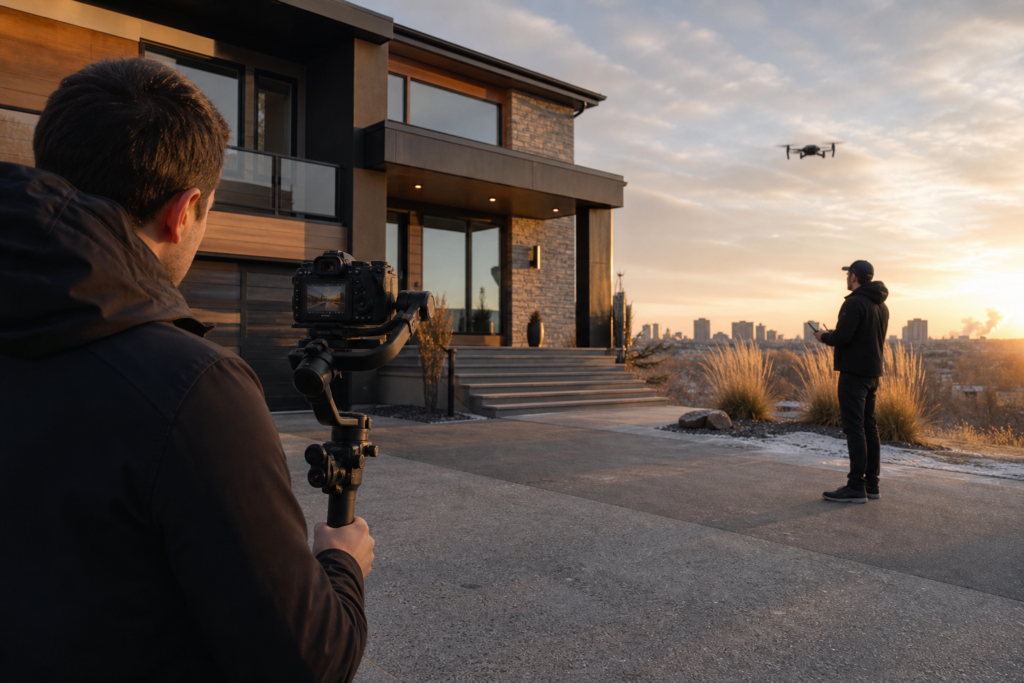
Drone video commonly adds $150 to $500 to a real estate video package in Canada. If drone work is booked as a standalone service, it may cost $300 to $800 or more depending on location, complexity, and Transport Canada requirements.
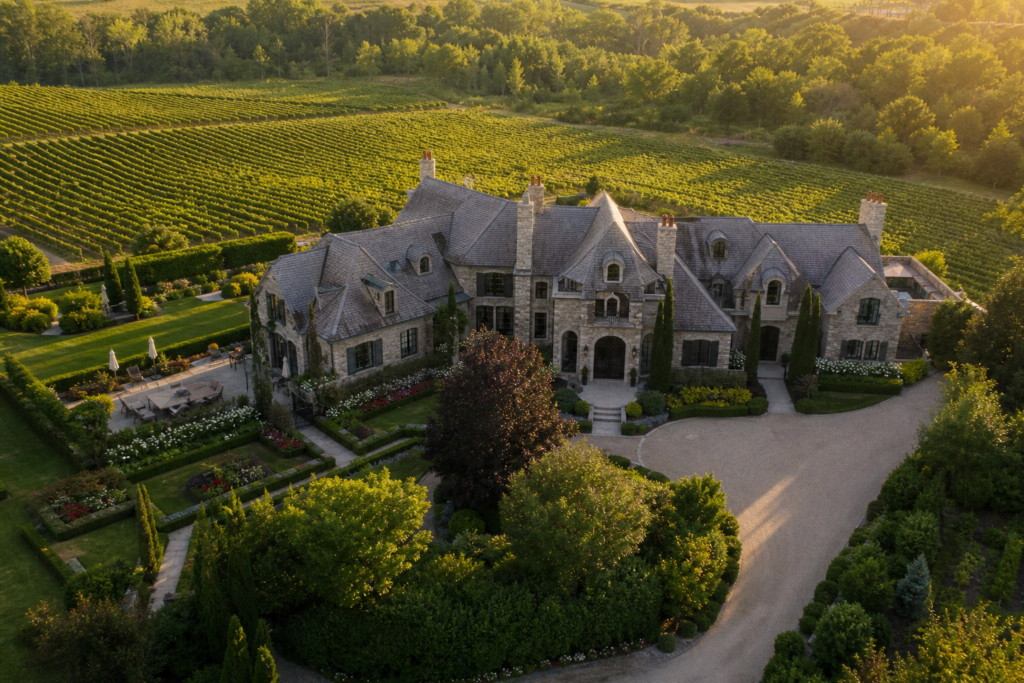
Drone footage is especially valuable for waterfront homes, acreages, luxury properties, new builds, rural listings, commercial properties, and homes near parks, trails, or skyline views. However, not every property needs drone video. For dense urban areas, condos, or homes in restricted airspace, drone may be limited or unavailable. A good real estate media team should confirm whether drone is practical before promising it.
Are vertical videos included in real estate videographer pricing?
Sometimes, but not always. Vertical video has become one of the most useful add-ons for agents because listings now need to perform on social platforms as well as MLS, websites, and YouTube. A horizontal listing film and a vertical reel are edited differently, with different pacing, framing, and shot selection.
Expect to pay about $150 to $500 for one or more vertical edits, depending on whether the content is simply repurposed or edited as a social-first video. Agent-led reels, voiceover reels, market-update style videos, and teaser campaigns may cost more because they require more planning and editing.
How much should agents budget for video plus photography?
Most agents should think in terms of complete media packages rather than video alone. Photos are still essential for MLS, while video helps buyers understand the experience of moving through the space. In Canada, a combined photo and video package often ranges from $800 to $2,500 depending on property size, city, drone needs, and deliverables.
For many standard listings, a strong package might include professional photography, a 60 to 90 second video, a short vertical reel, and optional drone. For premium listings, the package may include twilight photography, a cinematic property film, drone, neighbourhood footage, agent on-camera content, and multiple social cuts.
Do real estate videographers charge travel fees?
They can. Travel fees are common when the property is outside the provider’s normal service area. Some companies include a set radius in the base price, while others charge per kilometre or by travel zone. Rural properties, cottage listings, and luxury homes outside major cities may also require extra time on site, which can affect the quote.
When requesting pricing, provide the exact property address or nearest intersection. That helps the videographer quote accurately and flag any timing issues, parking challenges, ferry routes, drone restrictions, or special access requirements.
Is real estate video worth the cost?
For many listings, yes, especially when the home has strong layout, design, views, amenities, or lifestyle value. Video can help buyers understand how rooms connect, how natural light moves through the home, and what the surrounding area feels like. It also gives agents stronger content for email marketing, social media, listing pages, and seller presentations.
That said, video should match the listing strategy. A small entry-level property may only need a clean walkthrough or vertical teaser. A luxury property may need a polished cinematic film. The best value comes from choosing the right level of production for the property, not simply buying the cheapest or most expensive option.
What questions should you ask before hiring a real estate videographer?
Before booking, ask clear questions so you know exactly what is included:
- How long will the final video be?
- Is the video horizontal, vertical, or both?
- Are drone shots included or priced separately?
- How many revisions are included?
- What is the turnaround time?
- Is licensed music included?
- Are travel fees, GST, or HST extra?
- Can the video be branded and unbranded for MLS rules?
- Do you also provide photography, floor plans, or social media edits?
A professional provider should be able to answer these questions quickly and explain what package makes sense for your listing.
What is a realistic 2026 budget for real estate video in Canada?
For 2026, a realistic budget for a professional real estate videographer in Canada is $700 to $1,500 for a polished listing video, or $1,000 to $2,500 for a stronger package that includes photography, video, drone, and social content. Luxury properties, commercial projects, builder campaigns, and agent-brand videos should be quoted individually because they often require more creative planning and post-production.
If you are trying to control costs, prioritize the deliverables that will actually help sell the listing: high-quality photos, a clean video, and one or two vertical edits for social distribution. If the property has major exterior value, views, land, or location appeal, add drone if it is legally and practically possible.
Planning a Canadian listing and want clear pricing for photo, video, drone, or vertical social content? Melon Media creates cinematic real estate media for agents, brokerages, builders, and property marketers. Book a project or request a quote here.
Further reading
- How to Choose Real Estate Media Packages in Canada: Photo, Video, Drone and Floor Plans
- Real Estate Drone Photography Toronto: 2026 Pricing Compared
- Real Estate Video vs Photography: What Sells Canadian Listings Faster?
Further reading
- Luxury Real Estate Media Toronto | Melon Media
- Vancouver Video Production Rates 2026: Budget Guide
- Toronto Real Estate Video Pricing Guide 2026
Also see: Vancouver Real Estate Videography Pricing: 2026 Realtor Guide
Also see: Halifax Real Estate Videographer Guide: 2026 Pricing and Listing Video Options
Ready to tell your story on camera?
Cinematic video production with 48–72h delivery, across Canada.