July 8, 2026 · 8 min read · Video Marketing

Photos vs Video: What Sells Canadian Homes Faster?

Photos vs Video: What Sells Canadian Homes Faster?

When agents ask about real estate photography vs video, the real question is usually speed: which media helps a listing attract serious buyers faster? In Canada, the answer depends on the property, price point, neighbourhood and marketing plan. Photography is still the foundation of every MLS listing, but video can shorten the buyer decision process by showing flow, scale and lifestyle before a showing is booked.

For competitive markets like Toronto, Vancouver and Ottawa, the strongest results usually come from using both. Professional photos win the first click. Video keeps the buyer engaged, builds confidence and helps out-of-town or busy buyers decide whether the home is worth viewing in person.

The short answer: photography gets attention, video builds intent

Real estate photos are the main visual asset buyers scan on MLS, Realtor.ca, agent websites and listing portals. They need to be bright, accurate and composed to make a home look credible within seconds. Without strong photos, many buyers will never reach the description, floor plan or booking button.

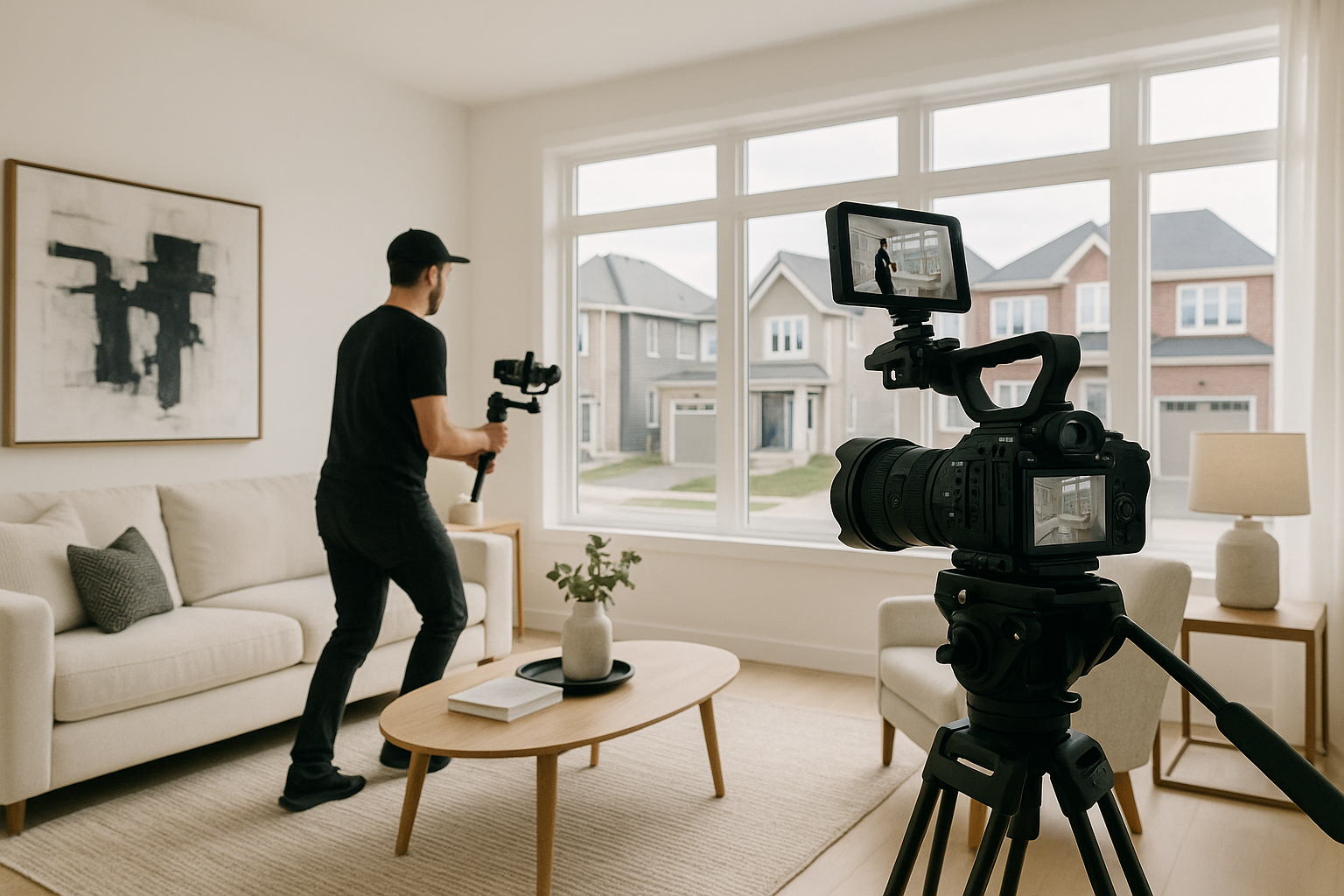
Video plays a different role. It helps buyers understand how the foyer connects to the kitchen, how large the living space feels, what the backyard experience is like and whether the home fits their lifestyle. In neighbourhoods where buyers compare many similar homes, a cinematic walkthrough or social listing film can make one property easier to remember.

Toronto: video helps listings stand out in dense neighbourhoods

In Toronto, buyers often compare condos, semis and detached homes across neighbourhoods such as Liberty Village, Leslieville, The Junction, Leaside, Yorkville and North York. Photography is essential because listings are judged quickly in search results. A strong hero image can be the difference between a buyer clicking or scrolling past.

Video becomes especially useful when the property has a unique layout, renovated interior, laneway suite, finished basement or outdoor feature. A Leslieville semi with a rear addition, for example, may not be fully understood from photos alone. A short listing video can show movement through the open-concept floor plan and highlight how the living, dining and kitchen spaces connect.

Vancouver: lifestyle visuals matter more than ever

In Vancouver, many listings sell a lifestyle as much as a floor plan. Buyers in Kitsilano, Mount Pleasant, Yaletown, Coal Harbour, North Vancouver and Burnaby are often looking for walkability, views, natural light and proximity to parks or water. Photography captures the key rooms and finishes, but video can communicate the daily experience of the home.

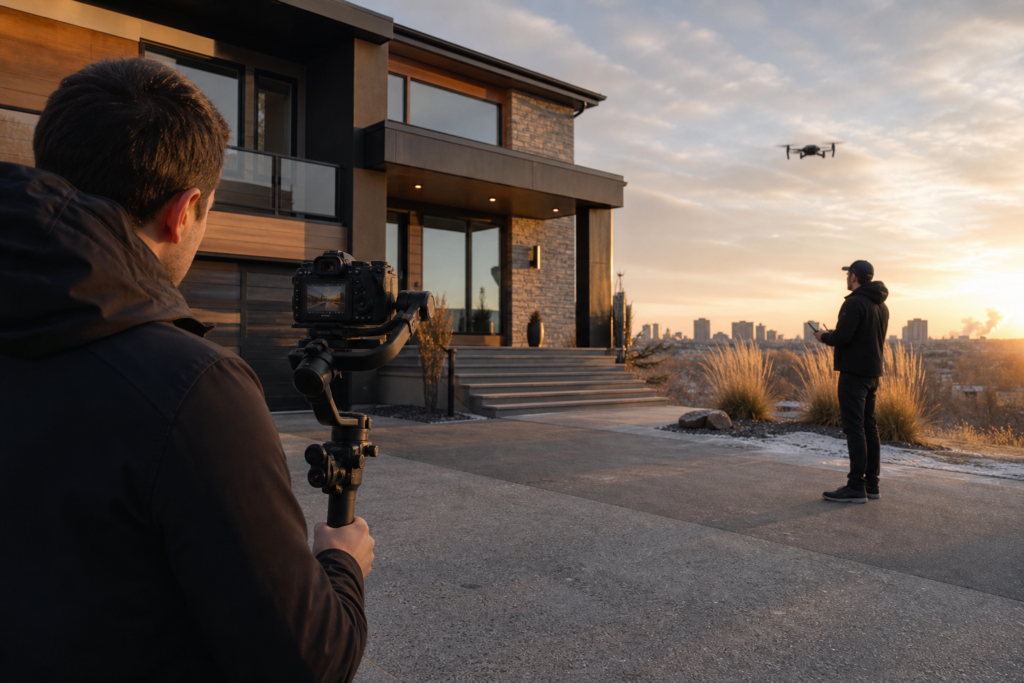
A condo with a balcony view, a West Side character home with a garden, or a North Vancouver property near trails can benefit from video because motion helps buyers feel the setting. Drone footage may also be valuable when it is legally and safely possible, especially for properties with views, land, waterfront proximity or strong neighbourhood context.

Ottawa: video supports relocation and family buyers

Ottawa buyers often include government workers, relocating professionals, military families and remote purchasers comparing neighbourhoods like Westboro, The Glebe, Kanata, Orleans, Barrhaven and Rockcliffe Park. In these cases, video is more than a marketing extra. It can reduce uncertainty for buyers who cannot attend every showing.

For family homes, a video walkthrough can clarify bedroom separation, basement use, backyard size and how close main living spaces are to entrances or garages. Photography still sets the visual standard, but video helps buyers decide faster whether the property matches their needs.

Real estate photography vs video: quick comparison

  • Best for first impressions: Photography. Photos dominate MLS grids, thumbnails, brochures and listing pages.
  • Best for explaining layout: Video. Movement shows room flow, transitions and scale more naturally.
  • Best for social media: Video. Reels, Shorts and vertical edits can increase reach and saveability.
  • Best for accurate documentation: Photography. Buyers expect clear room-by-room images before booking.
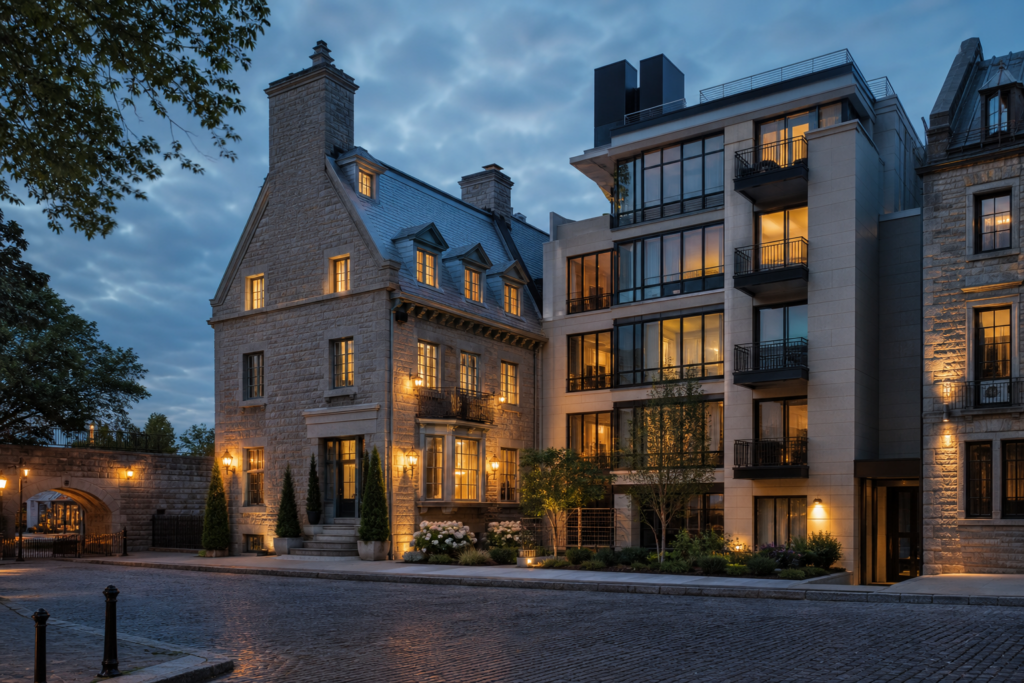
  • Best for luxury listings: Both. High-end homes need polished photography, cinematic video, aerials and detail shots.
  • Best for remote buyers: Video. It reduces guesswork and can pre-qualify inquiries.

Which actually sells homes faster?

No media service can guarantee days on market because price, condition, location, timing and agent strategy matter most. However, better media can improve the speed of buyer engagement. In practice, photography helps generate more initial interest, while video can help convert that interest into better-qualified showings.

A listing with weak photos may struggle before video has a chance to help. A listing with strong photos but no video can still perform well, especially if it is priced correctly in a high-demand area. But for homes with unique features, higher price points, competitive neighbourhoods or relocation appeal, video often helps buyers reach a decision faster.

When photos alone may be enough

Professional photography may be sufficient for straightforward listings where the layout is simple, the price point is entry-level, or the home is expected to attract immediate demand. For example, a well-priced condo in a high-traffic downtown Toronto building or a clean townhome in a popular Ottawa suburb may perform strongly with photos, floor plans and an accurate description.

Even then, the photos need to be professional. Poor lighting, distorted wide angles, clutter and inconsistent colour can make a listing feel less trustworthy. If the goal is to sell quickly, photography should never look like an afterthought.

When video is worth adding

Video is usually worth adding when the property has a story. That includes luxury homes, architect-designed spaces, major renovations, waterfront or view properties, large lots, income suites, unique floor plans and listings targeting buyers from outside the city.

Video is also valuable when the agent wants stronger social media performance. A 45 to 90 second cinematic listing video can be repurposed into vertical clips for Instagram, TikTok, YouTube Shorts and paid ads. This gives the listing more visibility beyond people already searching MLS.

Typical 2026 budget expectations in Canada

Budgets vary by city, property size, travel, turnaround and deliverables, but most Canadian agents should plan for photography as the baseline and video as the performance upgrade. In major markets, professional real estate photography commonly starts in the low hundreds for smaller listings and rises for larger homes, twilight shoots or added editing needs.

Listing video typically costs more because it involves planning, filming, stabilization, editing, music licensing, colour work and export formats. A practical combined budget for photos and video is often higher than photo-only service, but it can create more usable assets for MLS, websites, social media, email campaigns and listing presentations.

  • Photo-only: Best for essential MLS coverage and fast listing launches.
  • Photo plus floor plan: Best for buyers who need room dimensions and layout clarity.
  • Photo plus cinematic video: Best for stronger engagement and premium presentation.
  • Photo, video and drone: Best for luxury homes, views, acreage, waterfront or neighbourhood storytelling.

A simple decision checklist for agents

If you are deciding between real estate photography vs video for your next listing, ask these questions before booking media:

  • Is the home in a competitive neighbourhood where listings look similar online?
  • Does the property have a layout that is hard to understand from photos?
  • Will buyers care about lifestyle, views, outdoor space or nearby amenities?
  • Is the price point high enough that presentation affects perceived value?
  • Are relocation buyers or investors likely to view the listing remotely?
  • Will you promote the property on Instagram, YouTube, TikTok or paid ads?

If you answer yes to two or more, video is likely a smart addition. If you answer yes to four or more, a full media package with photography, video, floor plan and possibly drone coverage can be the stronger strategy.

The best-performing approach: build a media stack

The fastest-selling listings are rarely powered by one asset. They use a media stack: professional photography for MLS, floor plans for clarity, video for emotion and social clips for reach. This gives buyers multiple ways to understand the home and gives agents more tools to market it across channels.

For Canadian agents in Toronto, Vancouver, Ottawa and surrounding markets, the question is not whether photography or video is better. The smarter question is which combination matches the listing, the neighbourhood and the buyer profile. Photos make the listing searchable and credible. Video makes it memorable.

Planning a listing and want the right mix of photography, video and drone media? Book a production package with Melon Media and get visuals built for Canadian real estate marketing. Schedule your shoot here.

Further reading

Also see: Real Estate Photography vs Video: Which Sells Homes Faster in Canada?

Ready to make your listing stand out?
Book professional real-estate photography & cinematic video for your next listing — trusted by realtors across Toronto & the GTA.
Book your shoot →

Ready to tell your story on camera?

Cinematic video production with 48–72h delivery, across Canada.

Book a session →
WhatsApp Chat with us