June 20, 2026 · 8 min read · Video Marketing

Drone Footage for Canadian Real Estate Listings

Drone Footage for Canadian Real Estate Listings

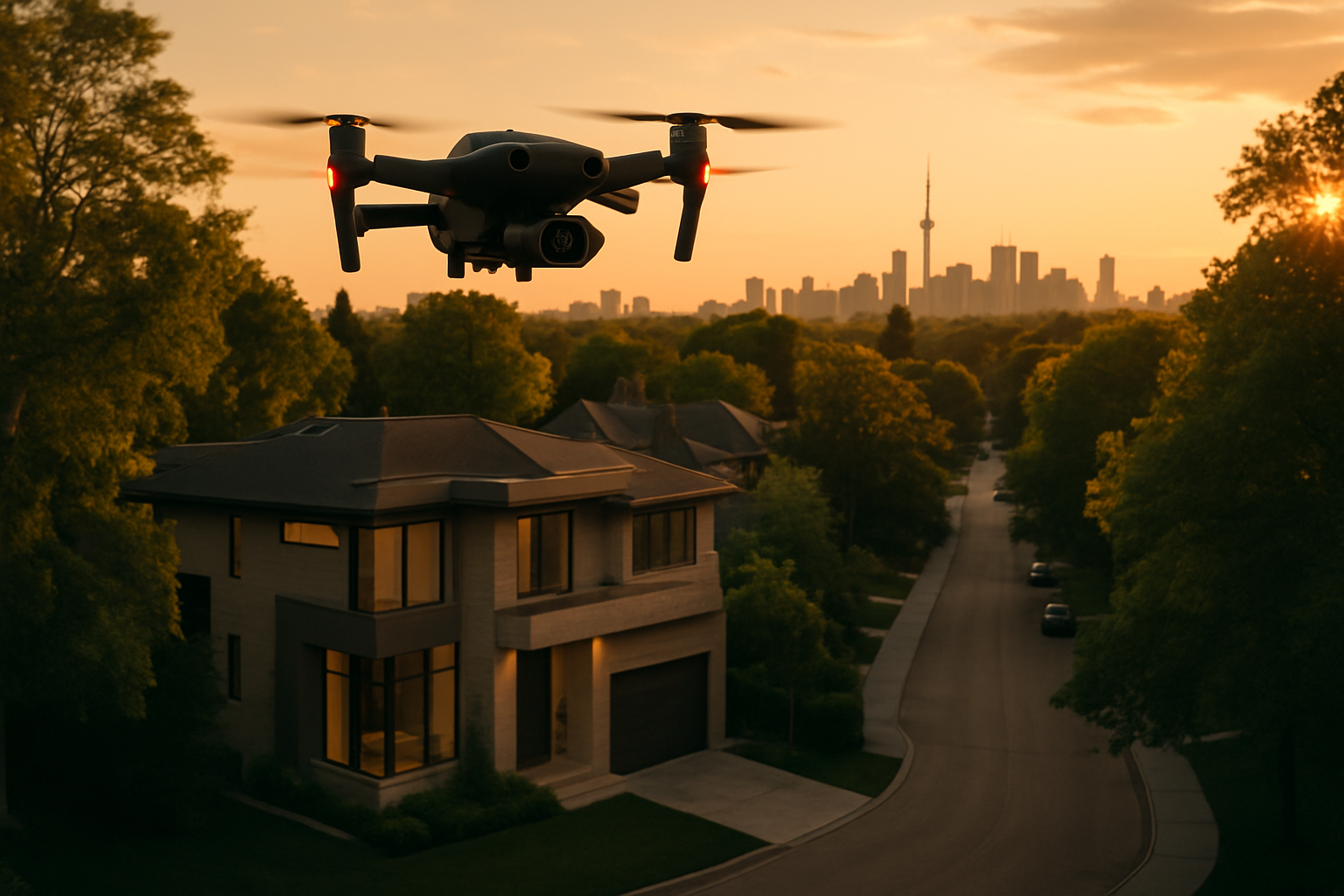
In 2026, buyers expect more than attractive interior photos. They want context: the neighbourhood, the lot, the streetscape, the lake view, the nearby parks, and the way a property sits within its environment. That is where drone footage has become one of the most valuable tools in modern real estate marketing. For agents, brokerages, developers, builders, and commercial property teams across Canada, aerial video is no longer a luxury add-on. It is a practical way to create stronger listing campaigns, improve perceived value, and help prospects understand a property faster.

In competitive markets like Toronto, Mississauga, Oakville, Vaughan, Markham, Calgary, Vancouver, and Ottawa, drone footage can be the difference between a listing that simply shows rooms and a campaign that tells a complete story. Used correctly, it supports higher engagement, better-qualified inquiries, and a more cinematic presentation that reflects well on both the property and the agent’s brand.

Why Drone Footage Matters in Real Estate Marketing

Real estate is highly visual, but traditional ground-level media can miss the bigger picture. Drone footage shows scale, orientation, privacy, access, and lifestyle in seconds. A detached home near a ravine, a luxury condo close to the waterfront, a farm property, a development site, or a commercial building with major road exposure all benefit from an aerial perspective.

For buyers relocating from another city or province, aerial video is especially helpful. It reduces uncertainty by showing how close the property is to schools, transit, retail, green space, highways, and surrounding homes. For sellers, this creates a more premium presentation and gives their listing a stronger chance of standing out online.

Best Property Types for Drone Footage

Not every listing needs the same level of aerial coverage, but many property categories benefit from drone footage as part of a complete media package.

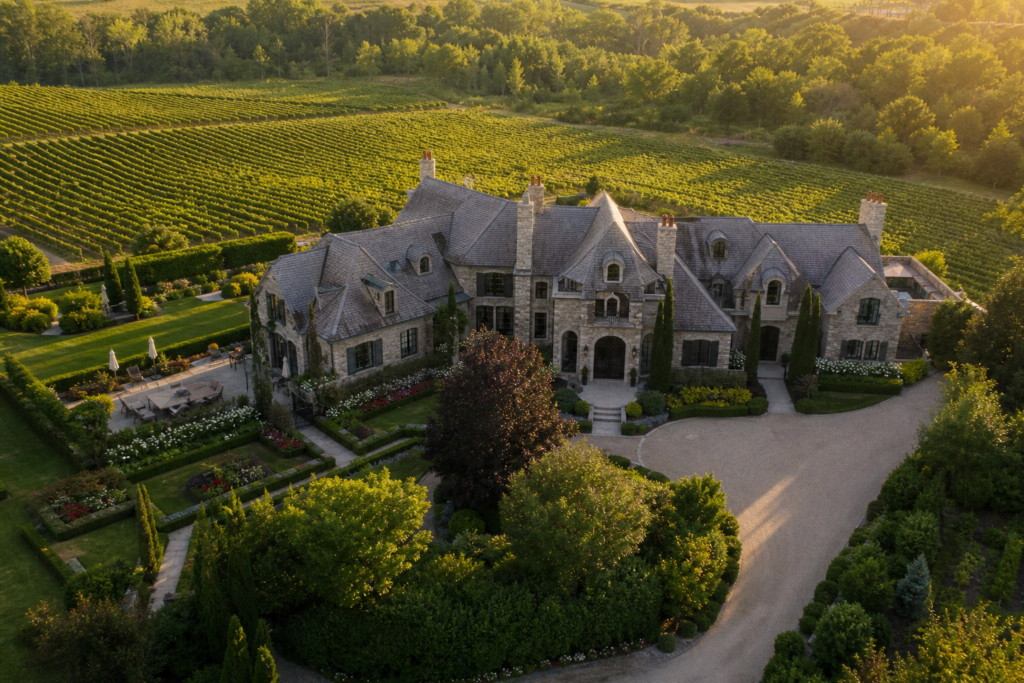
  • Luxury homes: Aerial video showcases landscaping, pools, estate lots, waterfront, architecture, and privacy.
  • Suburban detached homes: Drone footage highlights lot size, neighbourhood quality, nearby parks, and curb appeal.
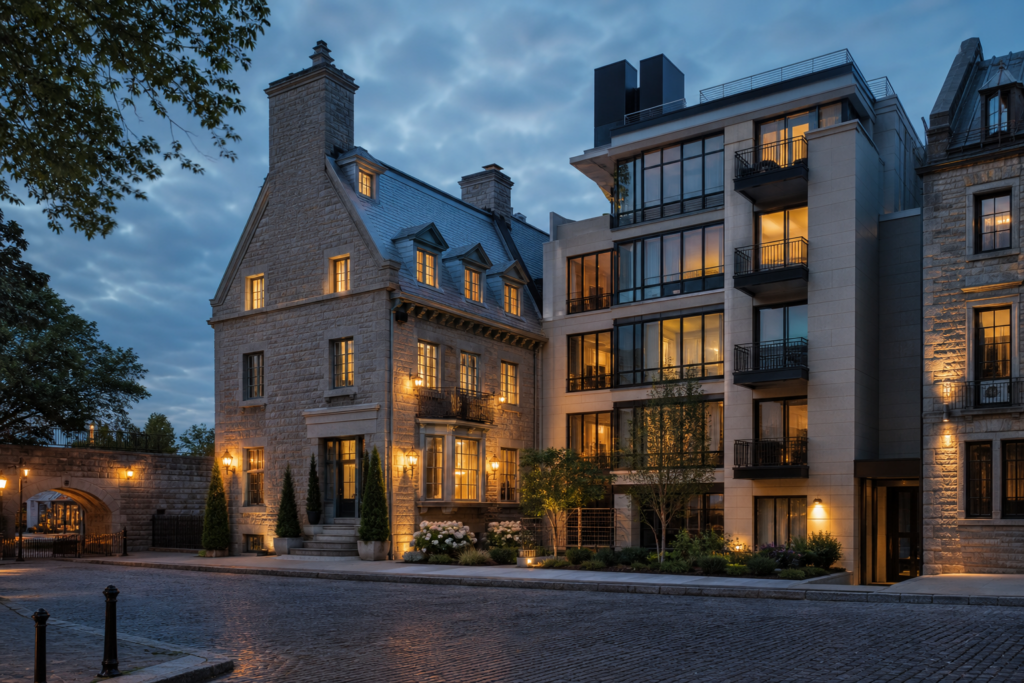
  • Condos: Aerial establishing shots can show proximity to transit, downtown cores, waterfront, universities, or entertainment districts.
  • New developments: Developers can use aerial video to communicate site progress, location advantages, scale, and surrounding infrastructure.
  • Commercial real estate: Drone footage helps show parking, loading areas, access routes, frontage, neighbouring businesses, and traffic exposure.
  • Land, farms, and redevelopment sites: Aerial media is often essential for showing boundaries, terrain, access, and development potential.

2026 Pricing for Real Estate Drone Footage in Canada

Pricing varies by city, property size, flight complexity, licensing requirements, editing scope, and whether drone footage is booked alone or bundled with a full cinematic video package. In Canada, many real estate teams in 2026 can expect the following typical ranges.

  • Basic drone add-on: $150 to $300 when added to a photo or video shoot. This usually includes a short set of aerial clips and several exterior angles.
  • Standalone drone shoot: $300 to $600 for residential listings, depending on travel, flight time, and deliverables.
  • Cinematic listing video with drone footage: $750 to $2,000+ for a polished property film combining interior walkthroughs, aerials, music, colour grading, and branded or unbranded versions.
  • Luxury or developer package: $2,000 to $7,500+ for multi-location filming, scripting, neighbourhood footage, talent, advanced editing, social cutdowns, and campaign-ready assets.
  • Commercial or construction progress drone coverage: $500 to $2,500+ per visit, with ongoing monthly or milestone-based packages often available.

In the Greater Toronto Area, rates can sit toward the higher end because of demand, traffic, tighter scheduling, controlled airspace considerations, and the level of polish expected by luxury and commercial clients. The best value usually comes from bundling drone footage with photography, floor plans, reels, and a cinematic property video rather than booking each service separately.

How Drone Footage Improves Listing Performance

Drone footage improves marketing performance because it captures attention quickly. On MLS, social media, YouTube, brokerage websites, email campaigns, and paid ads, movement from an aerial perspective creates an immediate sense of production value. It signals that the listing is important and that the agent has invested in professional marketing.

From an ROI perspective, the value is not only in more views. It is in better storytelling. A buyer may be more likely to book a showing when they understand the lot, the street, and the surrounding amenities before arriving. A seller may be more likely to choose an agent who demonstrates a premium marketing plan. A developer may use the same aerial assets across websites, investor decks, sales centres, social campaigns, and construction updates.

Neighbourhood Storytelling: The Biggest 2026 Trend

One of the strongest real estate video trends for 2026 is neighbourhood-led content. Buyers are not only purchasing square footage; they are choosing a lifestyle. Drone footage is ideal for showing how a home connects to parks, trails, schools, golf courses, waterfront, shopping districts, downtown streets, and transportation routes.

For Toronto real estate marketing, this is especially powerful. Aerial footage can show the relationship between a condo tower and the skyline, a home and a ravine system, or a property and nearby GO Transit access. For suburban and exurban markets, drone footage can communicate space, quiet streets, and community amenities far more clearly than photos alone.

Drone Footage and Social Media Content

Short-form video continues to shape real estate marketing in 2026. A single drone shoot can produce multiple assets: a cinematic opener for a full listing video, a vertical Instagram Reel, a TikTok teaser, a YouTube Shorts clip, a LinkedIn post for commercial properties, and a banner video for a landing page. This makes drone footage more cost-effective when planned as part of a content system.

The most effective aerial social clips are short, intentional, and edited for mobile. A slow reveal of a home, a top-down view of a large lot, a push-in toward a luxury facade, or a sweeping view of the neighbourhood can all create strong first impressions within the first three seconds.

Compliance and Safety in Canada

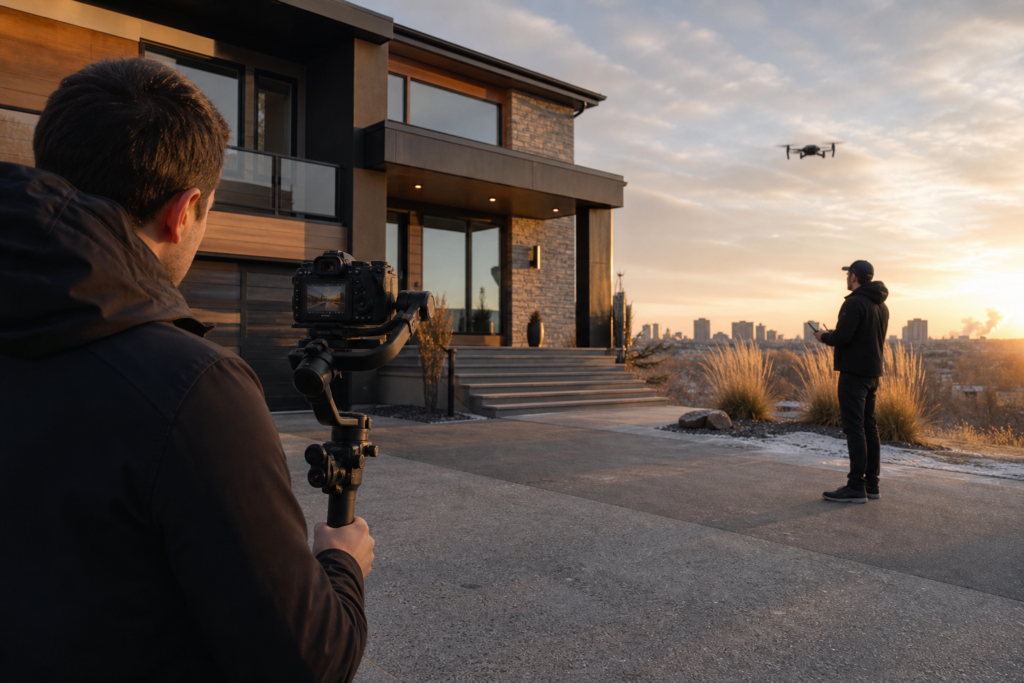
Drone operations in Canada are regulated by Transport Canada. Professional operators should understand pilot certification, airspace restrictions, privacy considerations, weather limitations, and safe operating distances. In dense urban areas such as downtown Toronto, flights may require extra planning due to airports, heliports, controlled airspace, people, buildings, and municipal considerations.

Hiring a professional drone operator is not just about image quality. It is also about reducing risk. Agents and brokerages should confirm that their media provider follows Canadian drone regulations, carries appropriate insurance, and knows how to plan flights safely and legally.

What to Include in a Drone Video Package

When comparing cinematic video production options, look beyond the number of clips. A strong package should be built around marketing goals, not just flight time.

  • Pre-shoot planning: Key angles, property features, sun direction, airspace checks, and neighbourhood highlights.
  • Cinematic capture: Smooth movements, stable framing, high-resolution footage, and consistent exposure.
  • Interior and exterior integration: Aerials should support the full story, not feel like random add-ons.
  • Editing and colour grading: Professional pacing, music licensing, clean transitions, and polished colour.
  • Multiple formats: Horizontal video for websites and YouTube, vertical cutdowns for social, and MLS-compliant versions when needed.
  • Fast turnaround: Real estate timelines are tight, so delivery speed matters.

When Drone Footage May Not Be Worth It

Drone footage is powerful, but it should be strategic. If a property is in a dense area with limited exterior appeal, poor weather, heavy tree cover, or restricted airspace, the return may be lower. In those cases, budget may be better spent on interior cinematic video, twilight photography, staging, lifestyle b-roll, or targeted social edits. A good production partner will recommend the right media mix instead of adding aerial footage automatically.

How Agents and Developers Can Maximize ROI

To get the most value from drone footage, plan it as part of a complete campaign. Use aerial clips in the listing video, social teasers, email marketing, open house screens, paid ads, and future brand content. For developers and commercial teams, archive aerial footage over time to show progress, support leasing, attract investors, and document milestones.

Agents can also use drone footage to strengthen their personal brand. Even after a property sells, high-quality aerial content can be repurposed in market updates, neighbourhood guides, listing presentations, and seller prospecting campaigns. This extends the ROI beyond one transaction.

The Bottom Line

Drone footage plays a major role in real estate marketing because it helps buyers see the full value of a property, not just the rooms inside it. In 2026, Canadian agents, brokerages, developers, and businesses should view aerial video as a strategic storytelling tool that supports visibility, differentiation, and stronger campaign performance. When professionally planned, safely captured, and edited into a cohesive cinematic package, drone footage can elevate both the listing and the brand behind it.

Ready to add cinematic drone footage to your next real estate campaign? Book a consultation and let’s create a polished video package built for your property, audience, and 2026 marketing goals.

Further reading

Ready to tell your story on camera?

Cinematic video production with 48–72h delivery, across Canada.

Book a session →
WhatsApp Chat with us