Kelowna Luxury Real Estate Video: Lakefront and Vineyard Planning

- Why does a Kelowna luxury property need specialized videography?
- What should a lakefront real estate video show?
- How should vineyard and acreage properties be filmed?
- Define the Kelowna production quote
- Which additional work answers a clear property question?
- Can drones be used at every Kelowna property?
- What is the ideal length for a luxury listing video?
- Should the campaign include vertical video?
- How should a property be prepared before filming?
- When is the best time to film in Kelowna?
- How do agents choose the right video partner?
Kelowna’s luxury market is defined by more than interior finishes. Buyers are investing in Lake Okanagan views, private docks, vineyard acreage, outdoor entertaining and the Okanagan lifestyle. Kelowna luxury real estate videography should therefore present the property as a complete experience—not simply a sequence of rooms.
This FAQ explains what luxury listing videos can include, how much production may cost in 2026 and what agents should consider when marketing lakefront and vineyard properties.
Why does a Kelowna luxury property need specialized videography?
Luxury buyers often evaluate a property’s setting before studying individual rooms. A cinematic video can establish the relationship between the residence, water, land and surrounding community in a way that still photography cannot.
Specialized production is particularly valuable for properties with private waterfront, panoramic elevations, vineyards, guest houses or resort-style outdoor spaces. Controlled camera movement, aerial footage, thoughtful lighting and professional editing help communicate scale while preserving a polished visual identity.
The objective is not to make a home look artificially dramatic. It is to reveal how its architecture and location work together.
What should a lakefront real estate video show?
A lakefront film should make the route from the residence to the water easy to understand. Wide establishing shots can introduce the shoreline, while ground-level footage shows patios, pathways, beaches, docks and views from key interior spaces.
Useful scenes may include:
- Sunrise or sunset views over Lake Okanagan
- The transition from the kitchen or living room to outdoor entertaining areas
- Private dock access and shoreline frontage
- Pool, hot tub, firepit and landscaping details
- Aerial perspectives showing privacy and neighbouring properties
- Lifestyle footage such as boating or dining, where appropriate
Drone footage should support the property story rather than dominate it. Viewers still need clear interior coverage and a realistic sense of layout.
How should vineyard and acreage properties be filmed?
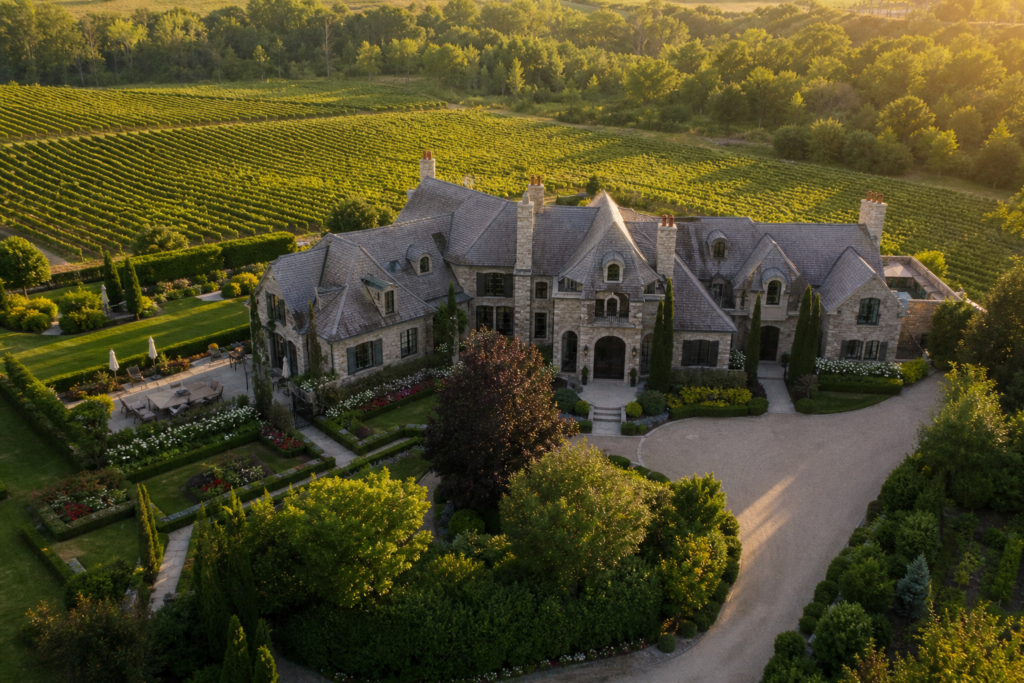
Vineyard properties require visual context. Rows of vines, elevation changes, access roads, production buildings and the main residence may cover a substantial area. A combination of aerial and ground-based movement can clarify how those elements connect.
Season also matters. Green vines, harvest activity and golden-hour light can create an inviting atmosphere, while dormant periods may place more emphasis on architecture, mountain views and interior amenities. If the property includes an operating winery, filming should be coordinated around staff, visitors, machinery and agricultural activity.
Define the Kelowna production quote
Price the actual property and requested work. Identify interior and exterior coverage, access, separate locations, agent audio, finished formats and any additional lighting visit. Ask for editing, revisions, licensing, applicable taxes and travel to be itemised.
Confirm aerial feasibility, weather alternatives and a delivery date before booking. This article does not establish a verified local market average. Use the Canadian video quote checklist to compare scope and production methods.
Which additional work answers a clear property question?
Consider an extra lighting window for the real view, a filmed agent explanation of a verified feature, or a vertical edit for a planned social post. For vineyards, specify safe access around agricultural activity. For lakefront homes, confirm the status of any dock or shoreline access before describing it as private.
Compare each addition by its purpose, cost and publishing use. Do not assume an aerial flight or a return visit is included.
Can drones be used at every Kelowna property?
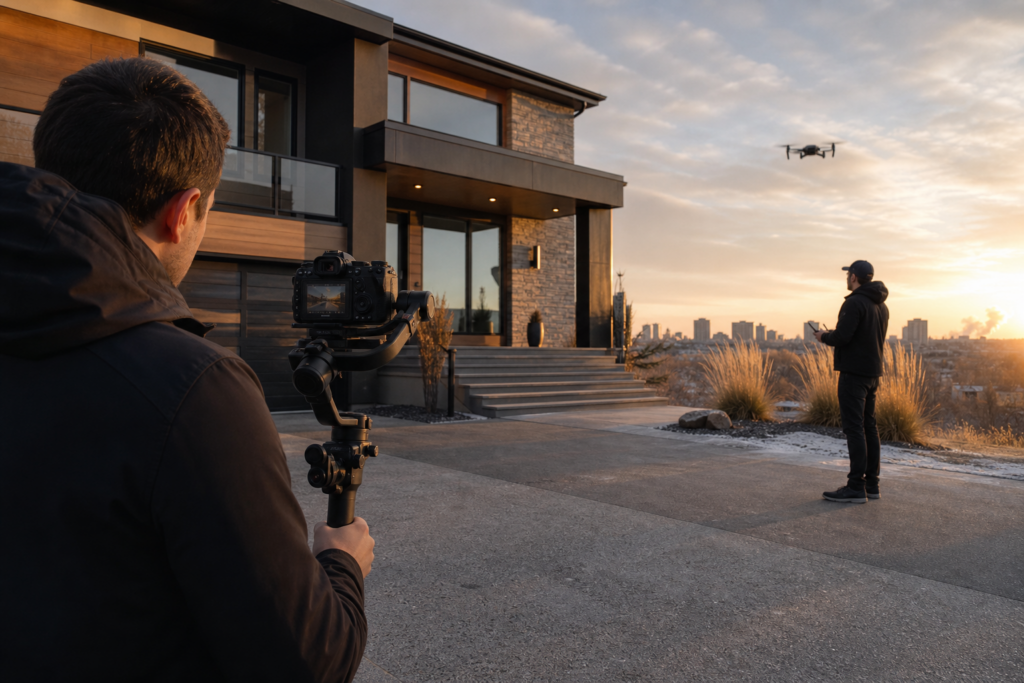
No. Drone operations in Canada are regulated by Transport Canada, and the flight plan depends on the drone, airspace, location and proximity to people or aircraft operations. Parts of the Kelowna region may require additional planning because of controlled airspace and local aviation activity.
A qualified operator should review the location before filming, meet any applicable pilot-certification requirements and obtain any required airspace authorization. Weather, wildfire restrictions, privacy, bystanders and neighbouring land must also be considered. Drone availability should never be promised before the site has been assessed.
What is the ideal length for a luxury listing video?
Choose a runtime that explains the property without repeating information. A shorter edit is useful for fast discovery, while a longer film can support qualified buyers who want a more complete tour.
Duration should reflect the amount of meaningful information available. Repeating similar rooms or aerial angles can make an expensive property feel less compelling. Strong editing establishes the setting, introduces the best features and finishes before attention declines.
Should the campaign include vertical video?
Yes, when social media is part of the launch. A cinematic horizontal film works well on listing pages, YouTube and presentations, but vertical edits are better suited to Instagram Reels, TikTok and YouTube Shorts.
Examples include a 15-second dock-to-living-room reveal, a 30-second vineyard sunset reel or a concise agent-led preview. Vertical videos should be deliberately reframed or captured for mobile screens rather than automatically cropped from the main film.
How should a property be prepared before filming?
Preparation protects production time and improves continuity. The home should be staged, cleaned and fully accessible before the crew arrives. Lights should work, vehicles should be relocated and landscaping, pools, docks and outdoor furniture should be ready.
For vineyard estates, agents should identify property boundaries and confirm which agricultural areas are safe to access. For lakefront homes, boats, water equipment and dock accessories should either be arranged intentionally or removed. A pre-production call can establish priority features, exclusions and the desired buyer profile.
When is the best time to film in Kelowna?
Early morning and late afternoon generally provide softer light, while twilight can showcase illuminated interiors and outdoor amenities. Midday may be useful for bright water and clear views but can create harsher contrast.
Because Okanagan conditions can change, scheduling should allow for wind, smoke, rain and seasonal landscaping. Productions involving drone footage or multiple exterior scenes benefit from a weather contingency plan.
How do agents choose the right video partner?
Review complete property films rather than short highlight reels alone. Look for consistent interiors, natural colours, stable movement, restrained drone use and editing that explains the property. The provider should also offer clear pricing, commercial music licensing, insured operations and a defined delivery process.
This Kelowna article is a planning resource. Confirm local provider availability, travel and permissions before booking; it does not establish a local Melon Media crew. For the current Toronto and GTA offering, see real estate video services.
Ready to tell your story on camera?
Photography and video for Toronto and the GTA. Review the service scope and delivery timing before booking.