How to Plan a Luxury Real Estate Video

A luxury real estate video needs a clear production brief before it needs an elaborate camera move. The brief should identify what distinguishes the property, what evidence supports those features and where the finished video will be used. A high asking price does not automatically call for every possible add-on.
Choose the property’s central story
Select two or three priorities: architectural design, a considered renovation, outdoor living, privacy or an unusual layout. Then connect each priority to a shot that can show it accurately. A claim about custom millwork needs a clear detail and room context; a claim about privacy needs more than a tightly framed garden close-up.
Gather approved factual notes before filming. Verify designer credits, material names, dates and other specific statements with the agent or owner’s documentation. Avoid treating an attractive finish as proof of a particular brand or origin.
Plan access and light together
Walk through the intended route and identify rooms that need a particular light window. Check reflective surfaces, display screens, exterior lighting, window treatments and features that require an operator. Arrange access to shared spaces separately, and establish which personal items should remain out of frame.
- Confirm staging is complete before the camera team arrives.
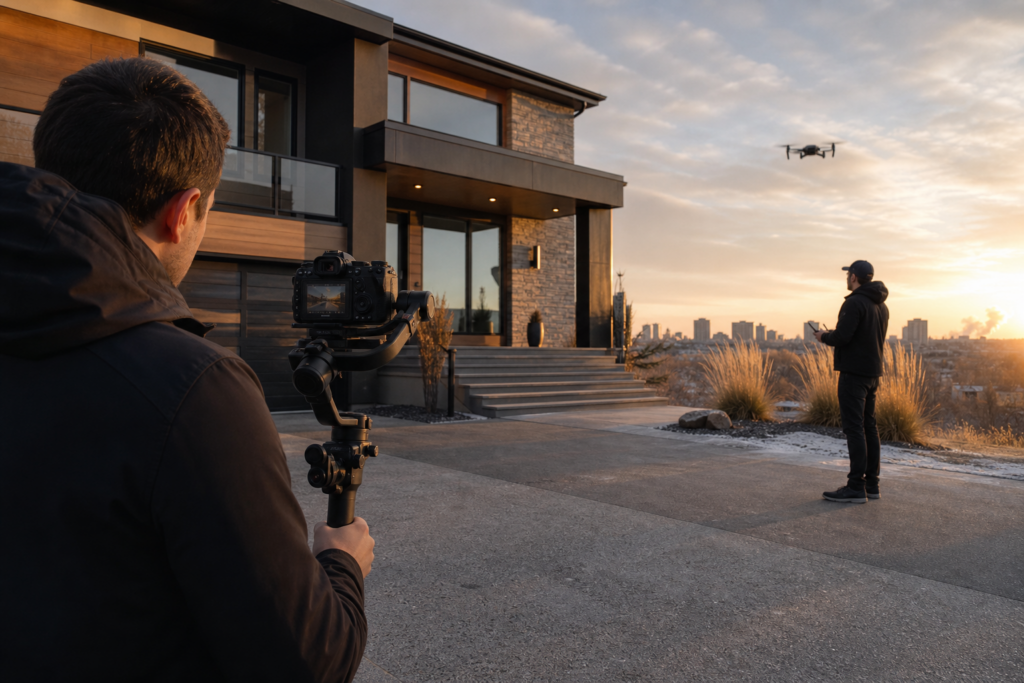
- Identify a safe, practical route through the home with equipment.
- Check permission to film occupants, staff or hired talent.
- Assign responsibility for operating fireplaces, pools or automated features safely.
- Decide whether a separate twilight visit is useful and how weather changes affect it.
Build a balanced shot list
Include an establishing exterior, readable main living spaces, the primary suite, important amenities and selected craftsmanship details. Alternate wide views with details so the audience can place each feature. Use slow movement where it reveals something; a static composition may explain an architectural relationship more clearly.
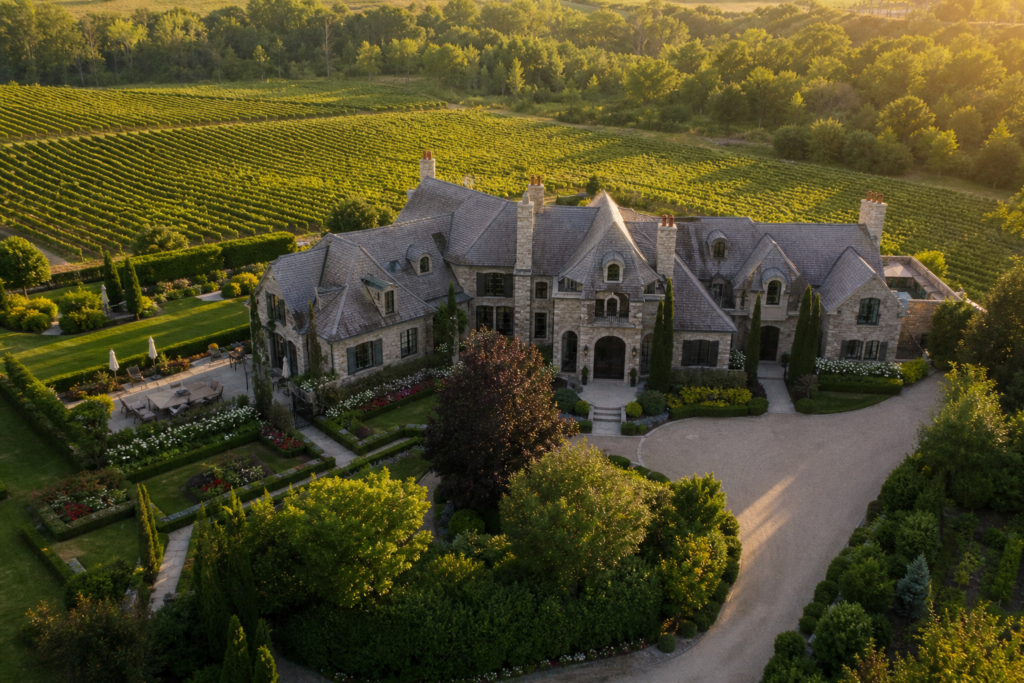
Aerials should add location context and remain subject to the operator’s assessment. A drone view above the property should not imply that the same view is visible from a room. Keep neighbourhood scenes distinguishable from included land or amenities.
Agree on voices, people and sound
An agent introduction can explain a feature that visuals alone leave unclear. Keep the approved script concise and supported by evidence. If lifestyle scenes are commissioned, make their staged nature appropriate to the presentation and keep the property visible.
Confirm whether the production needs dialogue, natural ambience or music. If music is used, the licence must cover the intended distribution, including advertising where applicable. Captions should be reviewed against the final speech, names and property details.
Define the finished files before the shoot
Specify the main edit’s purpose, intended length, horizontal or vertical framing, branding variants and any shorter edits. These are scope decisions, not guaranteed package inclusions. Agree the revision allowance, approval contact, delivery date and permitted uses in writing.
During review, first check factual accuracy and omitted key spaces, then pacing, sound and graphics. A polished film can support a professional presentation, but it does not establish a higher sale price or faster sale.
For creative directions to discuss in the brief, explore cinematic listing video concepts. For Toronto and GTA productions, review video options and combined media packages.
Ready to tell your story on camera?
Photography and video for Toronto and the GTA. Review the service scope and delivery timing before booking.