Real Estate Video vs Photography: What Sells Canadian Listings Faster?
Canadian agents ask this constantly: in the real estate video vs photography debate, which one actually helps a listing sell faster? The practical answer is that photography gets buyers to stop, while video helps them understand the property faster. For most Canadian listings, the strongest strategy is not choosing one format over the other. It is using high-quality photos as the foundation, then adding video when the property, price point, platform, or marketing plan justifies it.
Speed of sale depends on pricing, inventory, neighbourhood demand, seasonality, staging, and the agent’s follow-up. Media will not fix an overpriced listing. But strong visuals can increase attention, reduce buyer uncertainty, and help serious prospects decide whether to book a showing. That is where the right mix of photography and video can make a measurable difference.
FAQ: Real Estate Video vs Photography for Canadian Listings
Do photos or videos sell listings faster?
Photography usually creates the first click. Video often creates deeper engagement. On MLS, REALTOR.ca, brokerage websites, and listing portals, the main photo still carries a huge amount of weight because it appears in search results, email alerts, and saved-listing feeds. If the lead photo is weak, many buyers never reach the rest of the listing.
Video becomes powerful after that first click. It shows flow, scale, layout, light, outdoor access, and neighbourhood context in a way that still images cannot. For buyers comparing multiple homes, a clear property video can shorten the research process and help them feel more confident before requesting a showing. In that sense, photos often generate the visit, while video can help qualify the buyer faster.
Is professional photography still necessary if I have video?
Yes. Professional real estate photography is still the base layer of most successful Canadian listing campaigns. Photos are easier to scan, faster to load, and essential for MLS presentation. They also give agents assets for feature sheets, social posts, email campaigns, paid ads, open house promotions, and listing presentations.
Even when a listing includes a cinematic video, buyers still expect to see a complete photo gallery. A video should not replace listing photos. It should support them by answering questions that photos cannot fully answer, such as how the kitchen connects to the living room, how private the backyard feels, or how a lower level could function for a family.
When does real estate video make the biggest difference?
Video tends to be most valuable when the property has a story that needs movement. This includes luxury homes, renovated character properties, waterfront homes, acreages, homes with views, large floor plans, lifestyle-focused condos, and properties in markets where buyers may be relocating from another city or province.
For example, a Toronto condo with skyline views, a Kelowna home with lake access, a Calgary infill with designer finishes, or a Halifax property near the ocean can benefit from video because lifestyle is part of the buying decision. The camera movement, pacing, and sequence can help buyers imagine how the property lives, not just how it looks.
When are photos enough?
Photos may be enough for straightforward listings where the layout is simple, the price point is entry-level, the market is moving quickly, or the agent’s goal is to launch efficiently with a clean MLS presentation. A well-shot photo package can still outperform a poorly planned video. If the property is vacant, dated, very small, or has limited visual variety, a basic video may not add much unless it is paired with a strong strategy such as vertical social content or a neighbourhood-focused edit.
The decision should be based on the listing’s marketing challenge. If the challenge is simply showing that the home is clean, bright, and fairly priced, photography may do the job. If the challenge is communicating value, layout, lifestyle, privacy, or premium features, video becomes more useful.
What about short-form vertical video for Instagram, TikTok, and YouTube Shorts?
Vertical video has changed the conversation. Traditional horizontal listing videos are useful for websites, YouTube, landing pages, and email campaigns. Vertical video is designed for discovery. It gives agents a way to reach local buyers, sellers, neighbours, investors, and relocation audiences before they search a portal.
For speed, vertical video can help create early attention around a new listing. A 20 to 45 second walkthrough, teaser, or feature-driven reel can push traffic to the listing page and increase awareness during the first week on market. It is especially useful for listings with a standout hook: a chef’s kitchen, a rare view, a legal suite, a backyard oasis, a walkable neighbourhood, or a strong before-and-after renovation story.
Does drone video help listings sell faster?
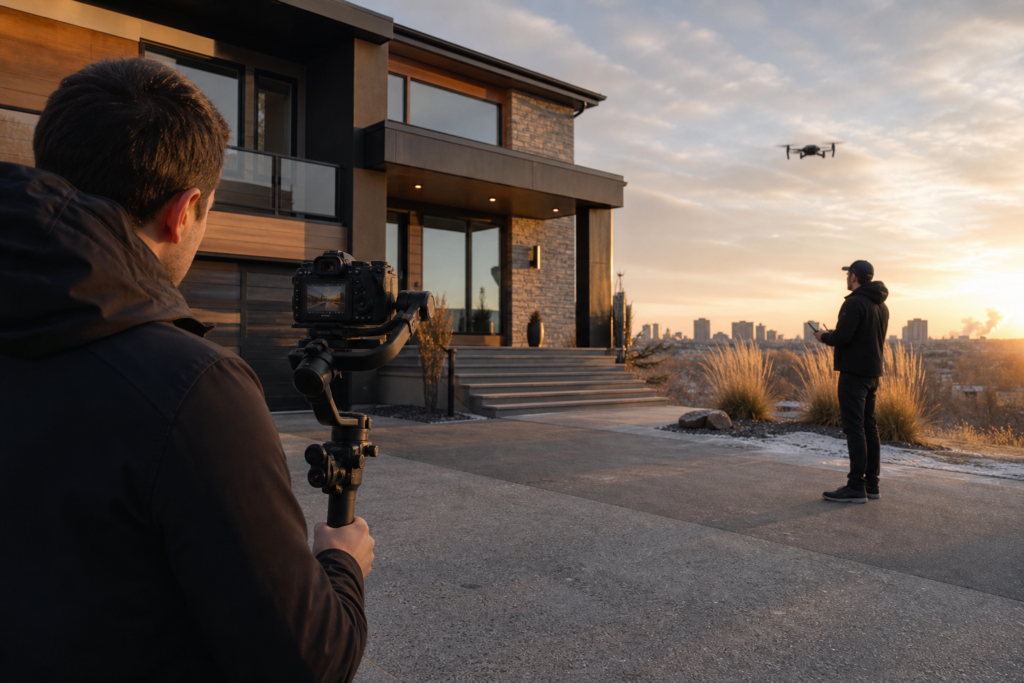
Drone video can help when location is part of the value. It is not necessary for every property, but it can be very effective for acreages, waterfront homes, large lots, estate properties, developments, homes near parks, and properties where proximity to amenities matters. Aerial footage can show scale, lot shape, privacy, views, and neighbourhood context.
In Canada, drone work also needs to be handled responsibly. Depending on location, airspace, and the job requirements, drone operations may involve Transport Canada rules, site checks, and safety planning. Agents should hire operators who understand real estate marketing and Canadian drone requirements rather than treating aerial footage as a simple add-on.
How much does real estate photography cost compared with video in Canada?
Costs vary by city, property size, turnaround time, travel, licensing, and deliverables. As a general planning range, professional real estate photography in Canada often starts in the low hundreds for smaller properties and increases for larger homes, twilight sessions, extensive editing, or premium packages. Video usually costs more because it requires more production time, stabilization, editing, music licensing, sequencing, and sometimes voiceover, drone, or vertical cutdowns.
Agents should compare value rather than only price. A lower-cost photo shoot that misses key angles can reduce buyer confidence. A video without a clear structure can feel like a slow slideshow. The best media package is the one that matches the property, the market, and the agent’s marketing plan.
What combination works best for most Canadian listings?
For many listings, the most balanced package is professional photography plus a short listing video or vertical social edit. The photos support MLS and listing portals. The video supports social media, email, paid campaigns, and buyer education. If the property is premium or location-driven, drone footage and a longer cinematic edit may be worth adding.
A practical structure looks like this:
- Standard listing: professional photos, optimized lead image, and a clean floor-plan or layout asset if available.
- Competitive listing: photos, vertical teaser video, and short walkthrough for social and email.
- Premium listing: photos, cinematic video, drone footage where appropriate, vertical cutdowns, and neighbourhood context.
- Relocation-focused listing: photos, video walkthrough, map or community context, and clear lifestyle storytelling.
Can video reduce unnecessary showings?
Yes, in some cases. A good video can help buyers understand the flow and feel of a property before they visit. This may reduce showings from people who are not a fit while increasing confidence among serious buyers. For occupied homes, luxury properties, rural homes, or listings where access is harder to coordinate, better qualification can be a real advantage.
However, the video must be honest. Overly dramatic edits, misleading wide angles, or hiding weak areas can create disappointment at the showing. The goal is not to make the property look like something it is not. The goal is to present it clearly and attract the right buyer faster.
What should agents prioritize if the budget is limited?
Start with excellent photography. Make sure the home is prepared, decluttered, cleaned, staged where possible, and shot at the best time of day. The first five images matter most because they determine whether buyers keep scrolling. After that, consider one high-impact video asset rather than trying to do everything cheaply.
If the listing has one strong selling feature, a short vertical video may be the best add-on. If the layout is the main concern, a walkthrough video may be more useful. If land, views, or location drive value, drone may be the better upgrade.
So, what sells Canadian listings faster: video or photography?
Photography is essential. Video is a multiplier. For Canadian real estate marketing, the fastest path is usually not video versus photography. It is photography plus the right type of video for the listing. Photos create the first impression. Video builds trust, explains the property, and gives agents more ways to promote it across digital channels.
If you are preparing a listing and want to choose the right mix of photography, video, drone, and vertical content, Melon Media can help you build a practical media plan for your property and market. Book a real estate media session with Melon Media.
Further reading
- Real Estate Photography Pricing in Toronto: 2026 Cost Guide for Agents
- Winnipeg Real Estate Media Costs: 2026 Guide
- Kelowna Luxury Real Estate Video Marketing
Further reading
- Winnipeg Real Estate Media Costs: 2026 Guide
- Kelowna Luxury Real Estate Video Marketing
- Ottawa Real Estate Media Costs for 2026
Also see: Real Estate Drone Photography Toronto: 2026 Pricing Compared
Ready to tell your story on camera?
Cinematic video production with 48–72h delivery, across Canada.